Building and Renovating Synagogues in New York City
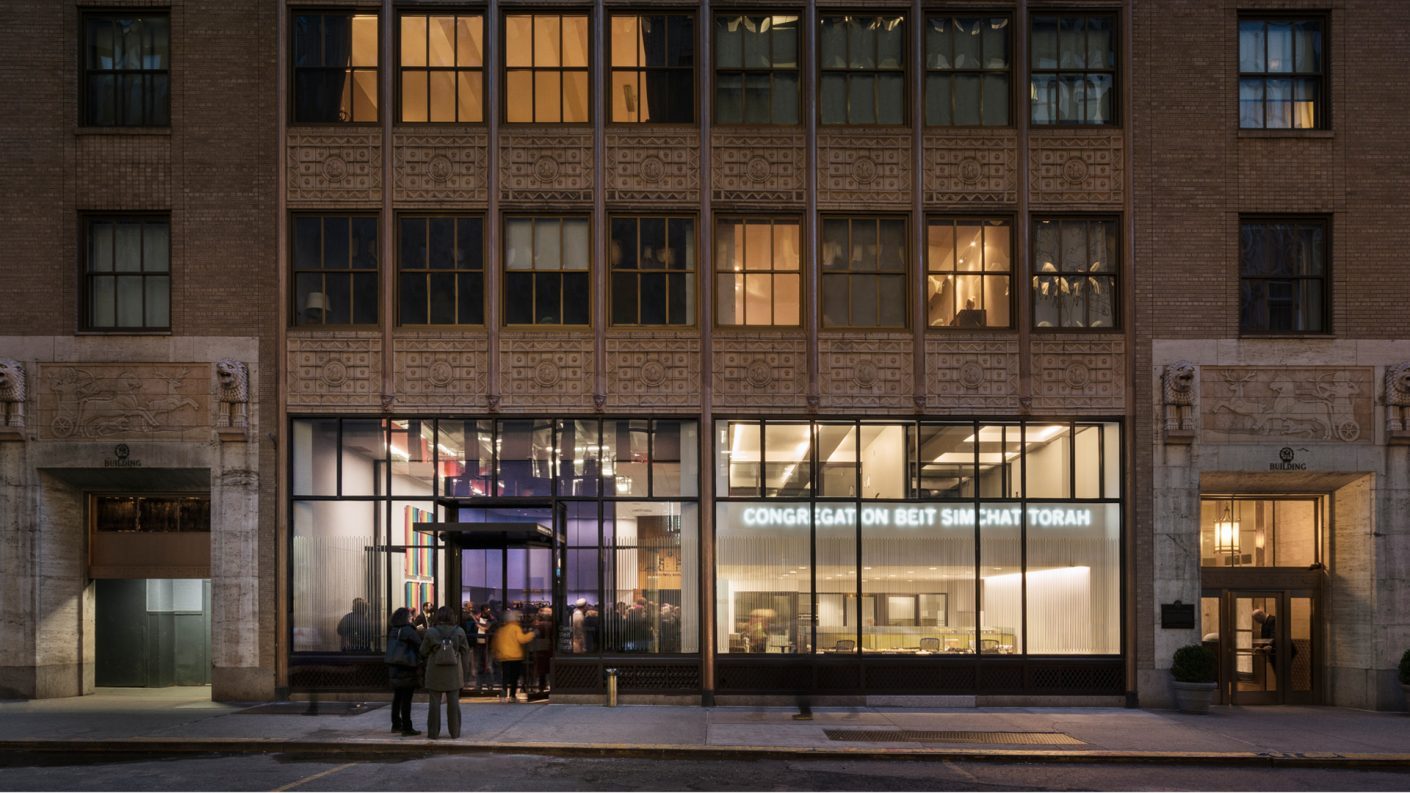
A synagogue is a sanctuary, a school, an office, a kitchen and an event space, and it keeps its calendar of services, holidays and life events whatever is happening in the building. Most of our work is in New York City, and religious institutions are one of the sectors we build for. Our synagogue projects include a new home for Congregation Beit Simchat Torah inside a landmark warehouse and the renovation of the sanctuary at Sutton Place Synagogue. This article is for building committees, executive directors, boards and the architects who work with them.
A new home inside a landmark
Congregation Beit Simchat Torah, the world’s largest LGBTQ Jewish congregation, found its home inside a landmark Cass Gilbert warehouse, and we built it with Architecture Research Office. Warmth, openness and access shaped every part of the design:
- a 16-foot-high lobby opens onto a sanctuary lit by daylight that moves across a canted wall of ribbed concrete, which also helps the room’s acoustics;
- the Ark sits within that wall behind a screen of steam-bent oak;
- curved oak pews stack away, so the sanctuary can host weddings and other life events;
- downstairs, a wide stair leads to classrooms, a kitchen and an oak-lined chapel and library that seats 70, and lines from Walt Whitman are inlaid in the terrazzo stairs.
Completed in 2016, the synagogue is LEED Gold certified and won a Faith & Form Interfaith Design Award. Working inside a landmark is its own discipline; we describe it in renovating landmark buildings in NYC.
Renovating a sanctuary in phases
Many congregations renovate in stages, as funds and plans allow. At Sutton Place Synagogue, we were general contractor for the sanctuary, the first phase of the congregation’s multi-phase master plan, working with MBB Architects and Melanie Freundlich Lighting:
- a new paneled ceiling, built to precise tolerances so the recessed and track lighting sit hidden within it;
- above the bimah, a color-tunable LED laylight that simulates daylight, framed so that a real skylight can be added in a later phase;
- a wireless lighting control system, integrated with the lighting and electrical trades, designed to grow with future phases.
Building for the next phase now, with structure, openings and infrastructure in place, saves the congregation from tearing out new work later.
Working around services
The congregation’s schedule comes first. At Sutton Place, the work was planned with the schedule of services in mind. In practice, a synagogue project has to account for:
- weekly services and the days the building cannot have construction noise;
- the High Holy Days and other festivals, which often decide when a sanctuary must be finished;
- weddings, b’nai mitzvah and funerals booked months ahead;
- schools, offices and community programs that keep using the rest of the building.
Phasing work in buildings that cannot close, working outside normal hours and planning around fixed calendars are part of how we build for schools, galleries and institutions across the city.
Wood, light and detail
Sanctuaries are judged up close: paneling, Ark surrounds, bimah platforms, railings, bookcases and doors. Our millwork and steel shops in Greenpoint make custom casework, veneer work, doors and paneling, stair and rail components, and finish samples and mockups, so a committee can see and approve a detail before it is built.
Questions for a building committee
- What must be ready for the next High Holy Days, and what can wait?
- Which parts of the building stay in use during construction?
- Is the building landmarked, and does the work touch the exterior?
- What should this phase prepare for the next one?
- Who in the congregation approves design changes, and how quickly?
- How will the board and the congregation be kept informed?
Working with us
Eurostruct has built in New York City since 1988, with about 150 people and project managers on site. Many congregations also run schools; see how we build for them in choosing a school construction contractor. See our cultural and institutional projects, or get in touch to talk through your plans and your calendar.