How to Choose a School Construction Contractor in New York City
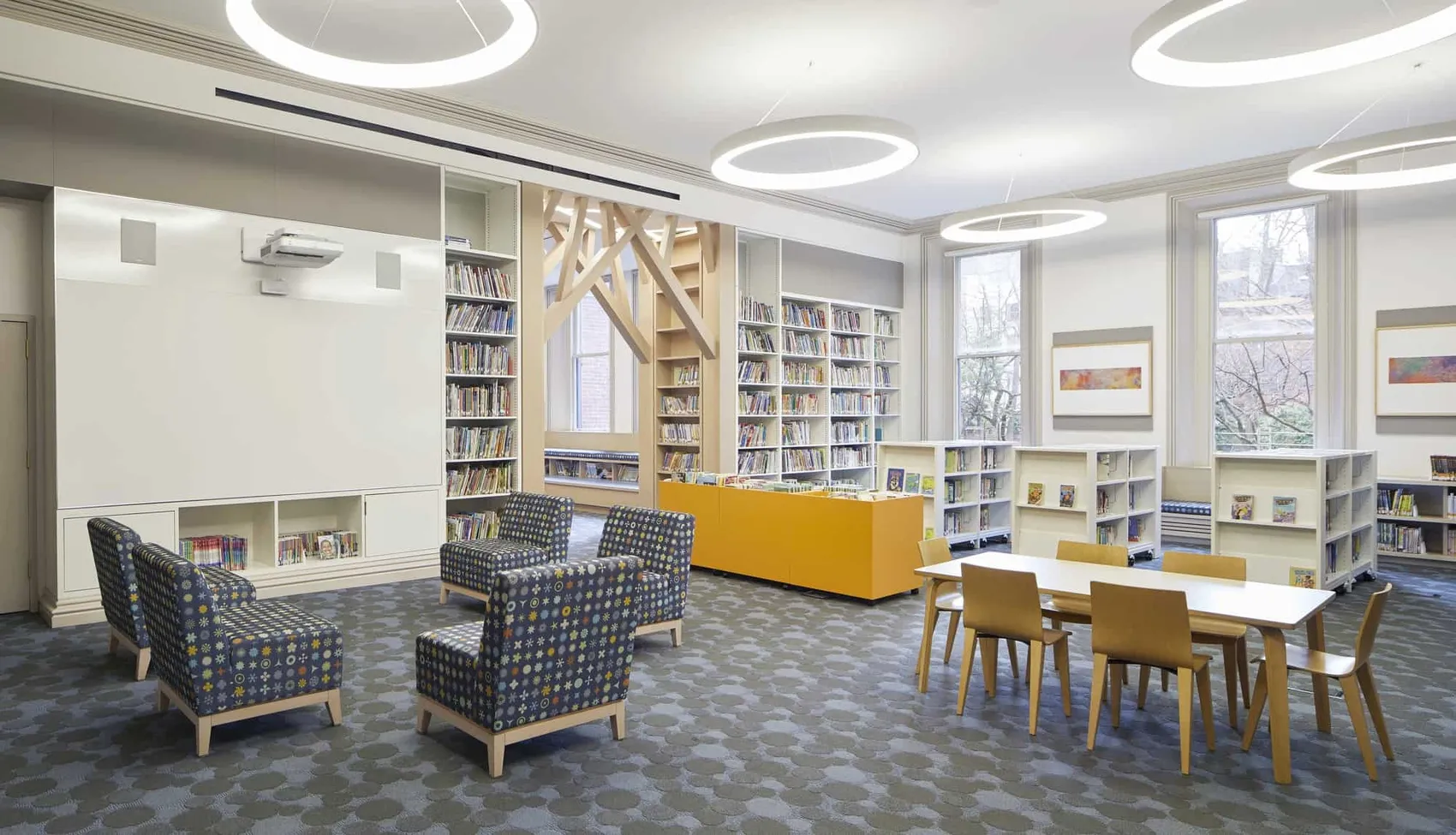
Eurostruct is a school construction contractor based in Greenpoint, Brooklyn. Most of our work is in New York City, and the schools we have built for are in Manhattan and Brooklyn: Dalton on the Upper East Side, Rodeph Sholom School and St. Hilda’s & St. Hugh’s on the Upper West Side, Berkeley Carroll in Park Slope, Brooklyn Friends School in Downtown Brooklyn, the Montessori School in Brooklyn Heights, and Packer’s Early Learning Center. We build for independent and early-childhood schools. This guide is for heads of school, facilities directors, boards and owner’s reps choosing a contractor for their next project.
Experience in buildings like yours
Few New York City schools sit on open campuses. They grow into brownstones, firehouses and landmarked buildings next door, and the construction work is often structural before it is anything else. Ask a contractor for projects like yours. Ours include:
- Rodeph Sholom School: the Upper School expanded into an adjacent five-story brownstone, converted to school use and enlarged, with new classrooms, a library, faculty offices and an expanded gym that now holds full-court basketball with spectator seating, plus a new façade and lobby.
- Montessori School: a former firehouse connected to the main building, with underpinning, new columns, beams, slabs and a stair, followed by a renovation of three floors of the existing school.
- Packer: a complete structural replacement of a building behind its landmarked façade, with every mechanical system and finish replaced while the façade stayed in place.
Underpinning and shoring, structural steel and Landmarks Preservation Commission coordination are part of our regular scope.
A schedule built around the school year
In a school, the calendar decides when the loud work happens. At Dalton, where we renovated the cafeteria, and at Berkeley Carroll, where we renovated the main lobby, entry vestibule and administrative offices, construction was scheduled around the school calendar so the buildings could stay in use. When a project needs the whole building, the summer break is the window: at St. Hilda’s & St. Hugh’s, 21,000 square feet on three floors was demolished to shell and rebuilt as 40 rooms in 12 weeks. We describe how we plan those builds in renovating a school over the summer.
Safety and security while school is open
Most school projects overlap with students in the building. A good contractor should be able to tell you how they will:
- phase the work so the school can stay open, with routes for students and staff kept apart from the work;
- keep the noisy work to nights, weekends and school breaks;
- time deliveries around drop-off and pickup on narrow Manhattan and Brooklyn streets;
- keep the entrance secure throughout. At Berkeley Carroll, the project itself added a new security booth that strengthens control of the school’s entrance while keeping the lobby welcoming.
Rooms that teach
The spaces schools ask for change with how they teach. At Brooklyn Friends School, a series of small rooms became an open library and makerspace of about 2,300 square feet, with zones for the Lower and Middle Schools that merge into one room through a central classroom with sliding glass doors. At St. Hilda’s & St. Hugh’s, the roof became a 4,200-square-foot playground with a snow-melt system, a green wall, stainless steel fencing and 25-foot trees.
Schools are also full of built-ins: classroom and library casework, cubbies, lockers, stairs and railings. We make much of that in our own millwork and steel shops, in our 22,500 sq ft facility in Greenpoint, which keeps lead times in our hands.
How the contract is set up
Schools usually choose between two ways of working with a builder:
- General contracting: a fixed price on finished drawings. Clear, and suited to projects where the design is complete before bidding.
- Construction manager at risk: the builder joins during design and commits to a guaranteed maximum price. Useful when the summer window is fixed and long-lead equipment has to be ordered before the drawings are finished.
Either way, preconstruction sets the project up: budgets checked at each design phase, long-lead items identified early and a schedule the school can plan around.
Questions to ask a school construction contractor
- Which schools have you built for in New York City, and what was the scope?
- Who will run our project day to day, and will they be on site?
- How will you keep students, staff and the entrance safe while we are open?
- Which work must happen over the summer, and what happens if an item arrives late?
- What do you make yourselves, and what do you buy out?
- How will you report cost and schedule to the head of school and the board?
Working with us
Eurostruct has built in New York City since 1988. About 150 people work with us, our project managers are based on site, and we run projects in Procore from start to closeout. Our school work has been with architects including 1100 Architect, MBB Architects and James Wagman Architect. See our educational projects, or get in touch with your drawings or a short description of the scope.