Brownstone Renovation in Brooklyn Heights
Brooklyn Heights was New York’s first historic district. 20+ of our projects are in the Brooklyn Heights area, and 15+ of them are inside the historic district itself, so for us, building in the Heights usually means building in a landmarked setting. We are a Brooklyn contractor, working from Greenpoint, a short trip from the neighborhood’s brownstone blocks.
We have renovated houses in the Heights, but out of respect for their owners we don’t name them. The work we can show is for the neighborhood’s schools, which occupy the same kind of old, protected buildings as the houses around them, and they faced questions many brownstone owners face: what to do when the structure behind the front has to be replaced, how to join two buildings, and how to open up small rooms. How landmarks approval works, and townhouse renovation in general, are covered in renovating landmark and historic buildings and townhouse and brownstone renovation in NYC.
When only the front can stay
At Packer’s Early Learning Center, the building was structurally replaced in full while its landmarked façade stayed intact, and the interior was rebuilt with all-new mechanical systems and finishes. We worked with James Wagman Architect, and the project was completed in 2019.
Work like this starts long before demolition. At Packer it began with a comprehensive structural analysis and a plan for keeping the façade in place while everything behind it was taken down and rebuilt. For a brownstone owner the lesson is the same: if the structure behind a protected front has to be replaced, the plan for holding the front comes first and sets the sequence for everything after it. Throughout, we worked closely with the school and gave it regular updates. What an early learning center itself needs is covered in building an early childhood center in NYC.
Joining two buildings
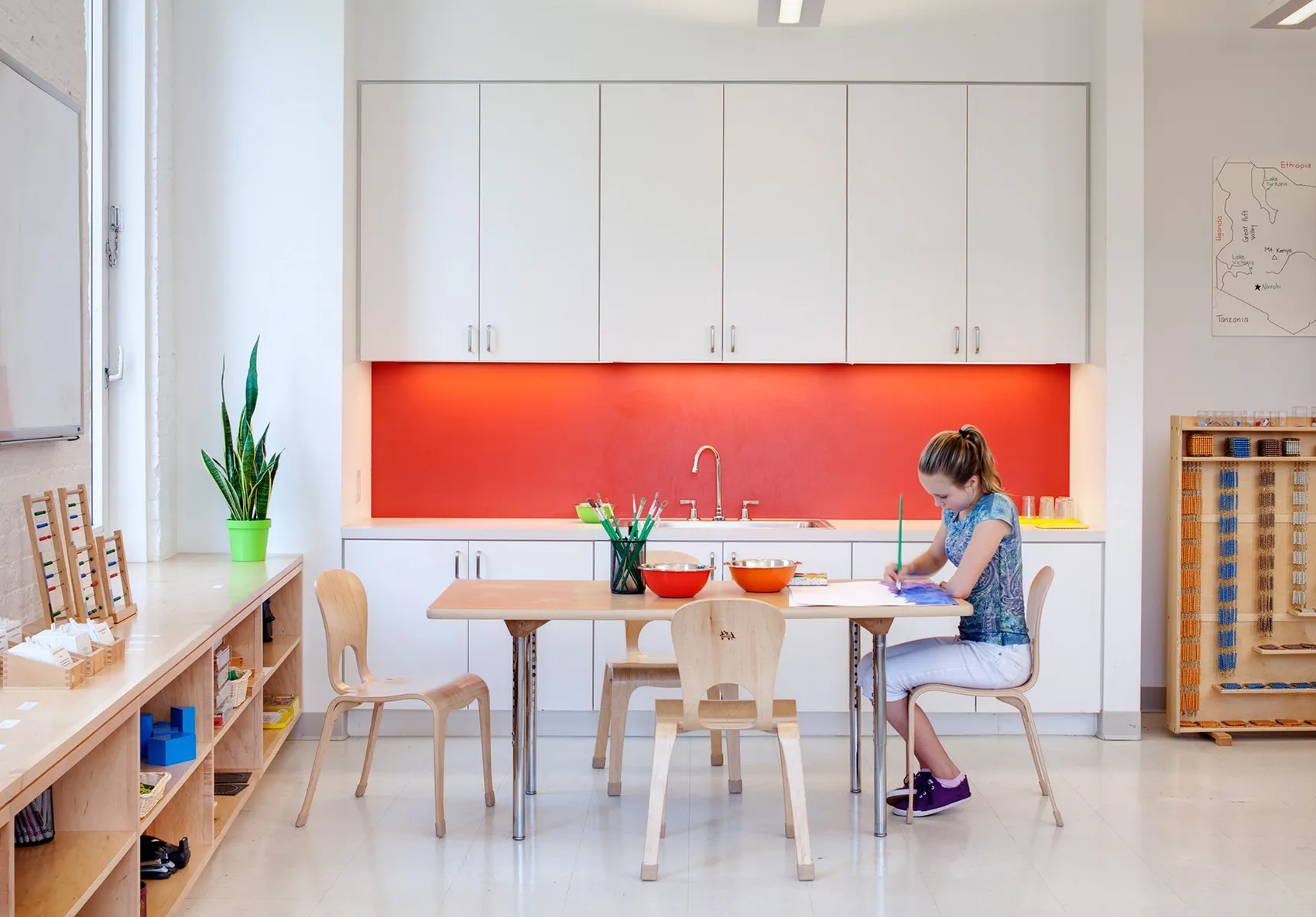
The Montessori School, a busy private school in Brooklyn Heights, grew by connecting a former firehouse to its main building, 19,500 square feet in all, with MBB Architects. We built it in two phases:
- The firehouse. Converting it to school use took substantial structural work: underpinning, new columns and beams, new slabs and a new stair.
- The existing school. Three floors of the main building were renovated over a summer break.
The project was delivered within the construction schedule and completed in 2013. Joining two old buildings means two structures and two sets of systems that have to work as one building. The underpinning side of that is covered in underpinning and cellar lowering in New York rowhouses, and the summer phase in renovating a school over the summer.
Opening up small rooms
Just beyond the Heights, in Downtown Brooklyn, we worked with 1100 Architect at Brooklyn Friends School. There, a series of small rooms was turned into one open library and makerspace of about 2,300 square feet. The Lower and Middle Schools each have their own zone, and the two can merge into one large room through a central classroom with sliding glass doors. A shared makerspace with 3D printers and workstations supports hands-on learning.
Our work there also included new ceiling finishes and new louver openings at the roof bulkhead for ventilation. In an old building, where new openings for air and equipment can go is a design question from the start, and on a protected block it matters even more.
Working in the Heights
- Most projects are in the district. 15+ of our 20+ projects in the area are inside it, so Landmarks Preservation Commission review is usually part of the plan.
- Narrow, residential streets. Deliveries and staging are planned and timed, and neighbors are kept informed.
- Buildings in use. Schools often stay open while we work, and owners sometimes stay in their houses, so the work is phased around them.
- Our own shops nearby. Stairs, railings, casework, paneling and the steel an old building needs when it is opened up come from our millwork and steel shops in Greenpoint, in the same borough.
Starting a Brooklyn Heights project
Send us the address and what you have in mind, with drawings if you have them. We will look at what the building is made of, what the district means for the work, and how the neighbors can be kept informed. More of our Brooklyn work is on our page as a general contractor in Brooklyn and among our educational projects, or call (718) 599-0031.