What to Check Before Hiring a General Contractor in NYC
Hiring a general contractor in New York means choosing who will run your building site for months, next to your neighbors, inside an old building and under the city’s rules. Most of what decides how that goes can be checked before you sign. This is what we would check, with Eurostruct as the example: we have built in New York City since 1988, about 150 people work with us, and we run our own millwork and steel shops in Greenpoint, Brooklyn.
Some project types have their own questions. We list them for schools in how to choose a school construction contractor, for offices and shops in commercial build-outs in NYC, and for guaranteed-maximum-price contracts in construction manager at risk. This article covers what applies to every project.
Registration with the Department of Buildings
In New York City, a general contractor has to hold the right registration with the Department of Buildings to obtain permits, and which one depends on the work, from alterations to new buildings and demolitions. Before you sign, check that the registration is current and in the company’s legal name. Anyone can look a contractor up on the Department of Buildings’ public portal, by business name or by registration number. The record shows the work filed under that registration, not the contractor’s whole history: cosmetic and other minor work doesn’t need a permit, so ask for the full project list as well.
Two related checks are worth making at the same time:
- Other licenses. Home improvement work on residential property needs a separate Home Improvement Contractor license from the city’s Department of Consumer and Worker Protection. A Department of Buildings registration doesn’t replace it.
- Insurance. Ask for certificates of insurance, and check that they cover the kind of work you are planning. Landlords, managing agents and co-op boards usually have their own requirements too.
Our own registration is general contractor no. 003021, held under our legal name, Eurostruct Inc.
Experience with your kind of building
A contractor who has built many projects like yours has already met most of the problems yours will have. Ask for projects of the same type, of similar age and in similar conditions, and look at them.
For us, that history is 500+ projects since 1988, mostly in old buildings. 300+ of them are in Manhattan, 180+ of them in historic districts, and the average building we work in dates from around 1915. We have built 15+ school projects, galleries such as David Zwirner and Gladstone, landmarked townhouses such as the West Village Townhouse, and institutions such as Congregation Beit Simchat Torah. If your building is landmarked, occupied, or needs work below grade, ask how many of the contractor’s projects were too.
References you can call
Ask for references from comparable projects, and call them. Architects are often the best references, because they see several contractors at work. Useful questions:
- Was the site run the way the contractor said it would be?
- How were problems raised, and how quickly were they solved?
- Did the people promised at the interview actually run the job?
- Would they build with this contractor again?
We don’t name owners as references in public. Our references are the architects we build with, among them Selldorf Architects (David Zwirner), David Chipperfield Architects (1014 – Space for Ideas) and Architecture Research Office (Dia Chelsea), as well as Gluckman Tang, MBB Architects, 1100 Architect and Steven Harris Architects. AIA New York also credits Eurostruct on projects including Dia Chelsea.
Who runs the site day to day
The company you hire is not the person you will deal with every day. Ask who the project manager will be, whether they will be on site, how often, and who makes decisions when they are not there. Ask how you will hear about progress, problems and changes, and how often.
Our project managers are based on site and travel between site and office, so one person is accountable for the job from award through closeout. We run projects in Procore, from documentation to closeout, so the record of the job is kept in one place.
Which trades they carry themselves
Most New York general contractors manage subcontractors and build little themselves. That can work well, but it is worth knowing which trades are in-house, which are bought out, and who manages the subcontractors on site.
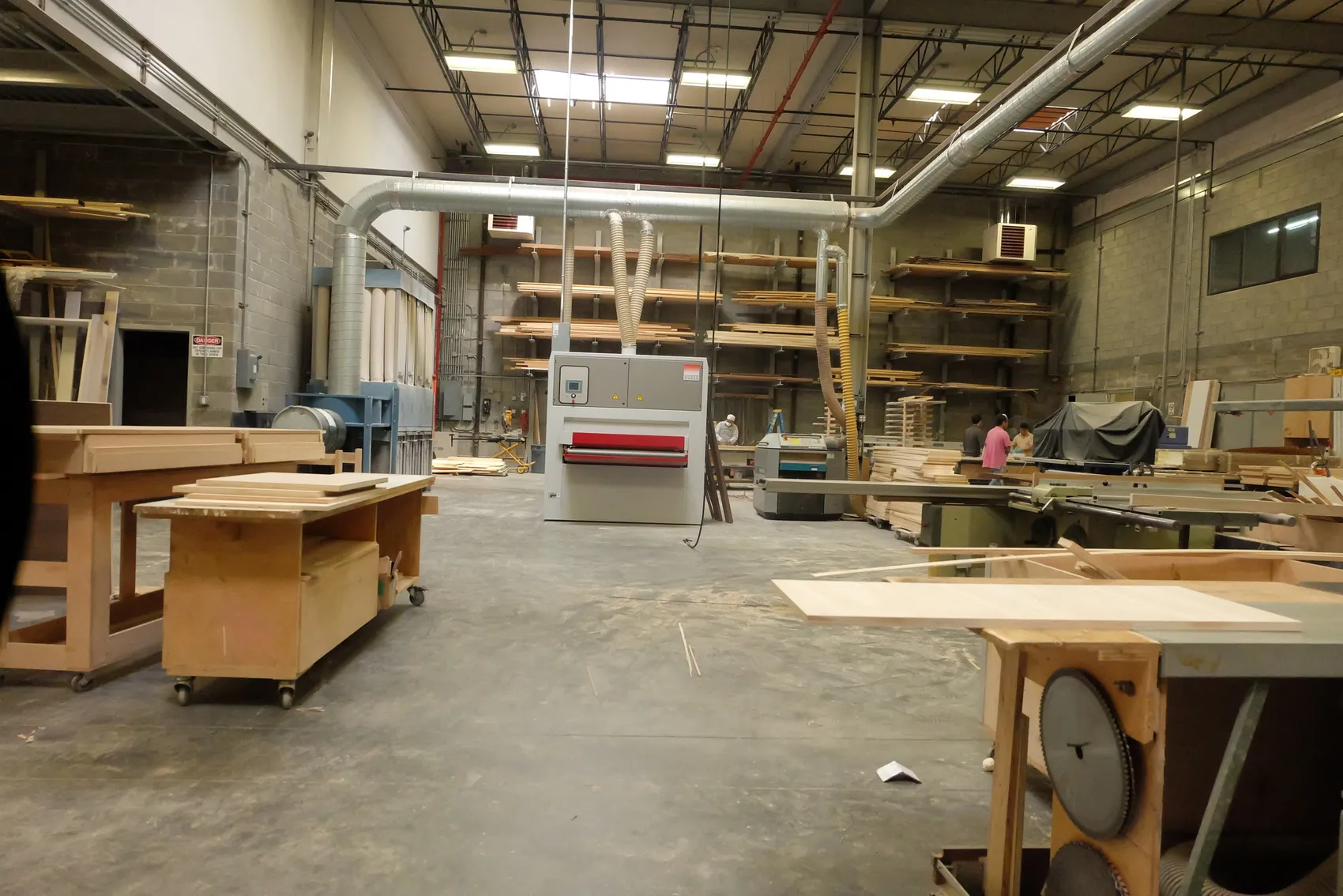
We carry carpentry, millwork and masonry with our own crews and shops. Our 22,500-square-foot facility in Greenpoint holds our millwork and steel shops, which make casework, paneling, doors, stairs, railings and structural steel, along with our estimating, contracts, accounting and insurance administration. Our long-standing subcontractors work under our direct management. When an existing condition turns up, that is the difference between a phone call and a wait for another company’s schedule.
How the contract is set up
Finally, check that the contractor offers the kind of contract that suits your project. A lump-sum contract suits finished drawings; construction manager at risk suits work that has to start while the design is still developing. We explain the lump-sum approach in general contractor in Brooklyn.
Talking to us
Send us your drawings, or just the address and what you have in mind. We will tell you what we have built that is like it, who would run it and how. See our work as a general contractor in Manhattan and in Brooklyn, or call (718) 599-0031.