Building Art Galleries in New York: What Architects and Owners Should Know
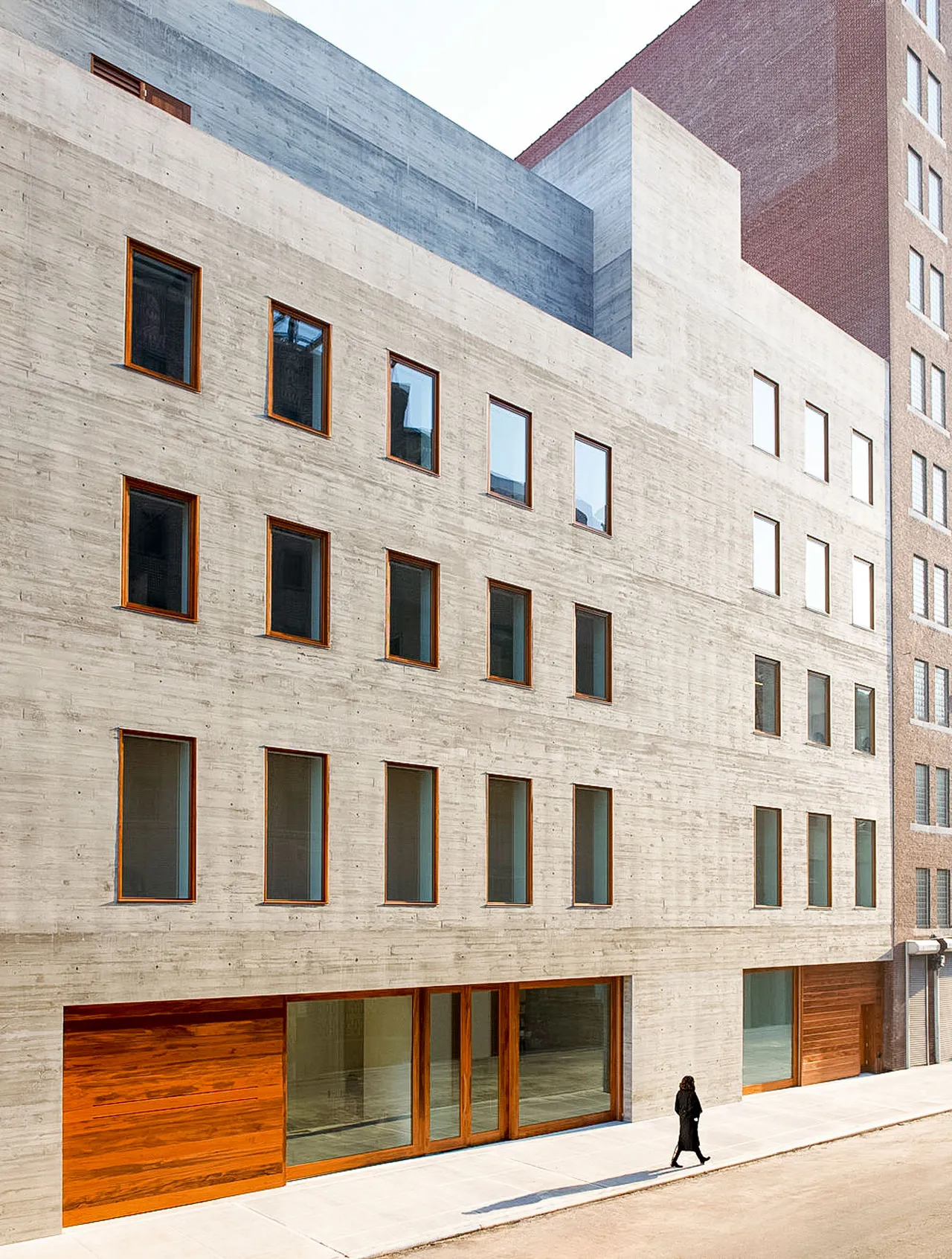
Galleries and art foundations are among the most demanding buildings we construct. The architecture is usually quiet: white walls, concrete floors, daylight. That quiet leaves nothing to hide behind. Eurostruct has built many of them in New York, including David Zwirner, Gladstone Gallery, Gagosian, Marian Goodman, Marianne Boesky, Acquavella, the Brant Foundation and the Swiss Institute. Here is what we have learned about building them.
Walls that disappear
Gallery walls have to be flat under raking light, take heavy work anywhere, and be repainted between every show. In practice that means:
- plywood or blocking behind the finish wherever art may hang, so the walls take heavy work anywhere without searching for studs;
- tight tolerances on flatness and on the joints at corners, reveals and floor lines;
- finishes chosen to survive constant patching and repainting.
The details that look simplest, like a shadow gap at the base or a flush door in a gallery wall, are the ones that need the most coordination between carpentry, drywall and metal trades.
Floors, light and space
- Floors are often polished or sealed concrete, where flatness, joints and color consistency are visible across the whole room.
- Daylight has to be controlled, not just admitted. At David Zwirner’s West 20th Street gallery, the main exhibition space has 46-foot-long skylights over an 18-foot ceiling.
- Lighting needs track, power and blocking planned into ceilings early, because it moves with every exhibition.
- Large openings and freight access matter as much as the rooms: oversized doors, freight elevators and loading must take crated work.
Climate for art
Collections and loans often require stable temperature, relative humidity and air quality. That affects the mechanical design, the building envelope and vapor control, and the commissioning schedule: systems need time to run and stabilize before work arrives. We plan that time into the schedule instead of treating it as part of the punch list. Light and blackout control belong in the same conversation, from skylight shading to how a gallery goes dark for film and video work.
Protecting art during construction
Galleries and institutions often keep operating while we build. Where art is on site or next door, we plan for:
- dust control and vibration mitigation, with noisy and heavy work scheduled around the program;
- coordination with art handlers, registrars and conservation consultants before work moves near a collection;
- security and access control integrated into the building, and kept intact during construction.
Opening dates don’t move
A gallery’s schedule is tied to its program: an opening, an art fair, a season. We phase work around live exhibition and program calendars, plan backward from the opening date, identify long-lead items such as skylights, glazing and specialty hardware in preconstruction, and often recommend construction manager at risk so work can start while the design is being finished.
Building in Chelsea and landmarked blocks
Many New York galleries sit in former industrial buildings or on tight lots between neighbors. David Zwirner on West 20th Street was built new: a five-story, 30,000-gross-square-foot building on 69 piles, with cast-in-place concrete and masonry, a suspended concrete stair running through all five floors, and a teak and architectural-concrete façade. It was the first LEED-certified commercial gallery in the United States. Schwartzman& combined three connected buildings, with new façades, roofs, skylights and mechanical systems throughout.
Craft in the details
Gallery wall systems and reveal details, display cases, vitrines and plinths, library casework, and the armatures, brackets and art-hanging supports behind the work are part of how a gallery feels and works. We make them in our own millwork and steel shops in Greenpoint, coordinated with the architecture rather than bought in separately.
The architects we build with
Our gallery work has been with architects including Selldorf Architects, Gluckman Tang, TenBerke, studioMDA and Caplan & Colaku. The Brant Foundation received an AIANY Design Award in 2022, and AIA New York credits Eurostruct on projects including Dia Chelsea.
If you are planning a gallery, foundation or exhibition space in New York, see our cultural and institutional projects or get in touch to talk through your schedule.