Building Retail Stores and Showrooms in New York
A store is a brand’s most public room. Customers see every joint, every light and every shelf, and the doors usually open on a date that was announced long before construction started. In Manhattan we have built stores for Prada, Miu Miu, Helmut Lang, Emporio Armani, Armani Exchange, Mallett and The Detox Market. We have no photographs of most of them, so they aren’t on our projects page, but they taught us what retail construction in New York asks of a contractor. Our two most recent stores, both in SoHo, are on our projects page.
Stores we have built
- Prada: 575 Broadway in SoHo, 724 Fifth Avenue and 841 Madison Avenue, and the Prada showroom at 610 West 52nd Street
- Miu Miu: 831 Madison Avenue and 100 Prince Street in SoHo
- Helmut Lang: 81 Greene Street in SoHo
- Emporio Armani: 601 Madison Avenue and 134 Spring Street in SoHo
- Armani Exchange: 536 Broadway in SoHo
- Mallett: 927 Madison Avenue
- The Detox Market: 76 East Houston Street
Two recent stores in SoHo
Both were completed in 2023 with Atmosphere Design Group, and both began by clearing out what the previous tenant had left behind.
- Emporio Armani, 134 Spring Street: a 4,500-square-foot boutique on the ground floor. We took out the old non-load-bearing walls to open up the floor, then built the store to the architect’s drawings. The building is in the SoHo–Cast Iron Historic District, so the work went ahead under Landmarks Preservation Commission approvals, with the building’s historic fabric protected throughout.
- Armani Exchange, 536 Broadway: a 4,951-square-foot store on the cellar and ground floors. We stripped both levels back to a clean shell, removing the previous tenant’s partitions while protecting the building’s structure and systems, and then built the store.
We also build showrooms, studios and offices for design and fashion brands, including Vitra’s furniture showroom on the Bowery, Calvin Klein’s studio in the Chelsea Arts Tower and the Giorgio Armani corporate office. Offices and restaurants are covered in commercial build-outs in NYC.
Built to a brand’s standard
A fashion or design brand usually arrives with its own architect, its own materials and a clear idea of how its stores should look. Our job is to deliver that standard inside a New York building that was never designed for it, with walls that aren’t straight, floors that aren’t level and ceilings full of old pipes.
In practice that means:
- reading the drawings with the brand’s architect and finding out early where the building and the design disagree;
- holding the tolerances customers will see: long runs of stone or wood, reveals, glass and lines of light;
- finish samples and mockups of fixtures, approved before anything is made.
The storefront
The storefront is the part of a store the street sees, and the part with the most people to satisfy. The landlord usually has to approve changes to it. On a landmarked building or in a historic district, as in much of SoHo and along long stretches of Madison Avenue, the storefront also needs Landmarks Preservation Commission approval. We build that review into the schedule. More in renovating landmark and historic buildings, SoHo and Tribeca cast-iron buildings and the Upper East Side Historic District.
Storefront work also happens on the sidewalk: a temporary construction fence, protection for people walking past, and a street that stays open for everyone else. At Delta Charlie in Nolita, changes to the storefront gave a bar a new street presence; a store’s front gets the same care.
Systems in someone else’s building
Most stores are tenants. New lighting, heating and cooling, plumbing and sprinklers have to connect to a building that belongs to someone else, with its own rules, its own engineers and its own schedule for shutting systems down. A store renovation usually includes mechanical, plumbing and sprinkler work alongside the finishes, and getting those connections right, and inspected, often decides whether the store opens on time.
Working around open doors
Shopping streets don’t close for construction. The stores next door stay open, the tenants upstairs keep working, and deliveries compete with everyone else’s for space at the curb. That usually means:
- deliveries timed to the street and the building, often early in the morning;
- noisy work at night or before the neighbors open, where the building and the city allow it;
- a clean, closed-off site, because on a shopping street the construction site is part of the street.
More on a building’s rules for contractors in working inside a Manhattan office building.
Opening day
A store opening is tied to a season, a collection or a launch, and it rarely moves. We plan backward from that date. Long-lead items such as stone, glass, lighting and custom fixtures are identified in preconstruction and ordered first, and the last weeks are kept free for fixtures, merchandise and the brand’s own installers.
Fixtures from our own shop
Display cases, vitrines, plinths, shelving and paneling are what customers touch, and our millwork and steel shops in Greenpoint make them, along with custom casework, veneer work and architectural metal, with finish samples and mockups for approval. Because the shops are ours, the fixtures are scheduled with the store rather than around another company’s work.
Showrooms and studios
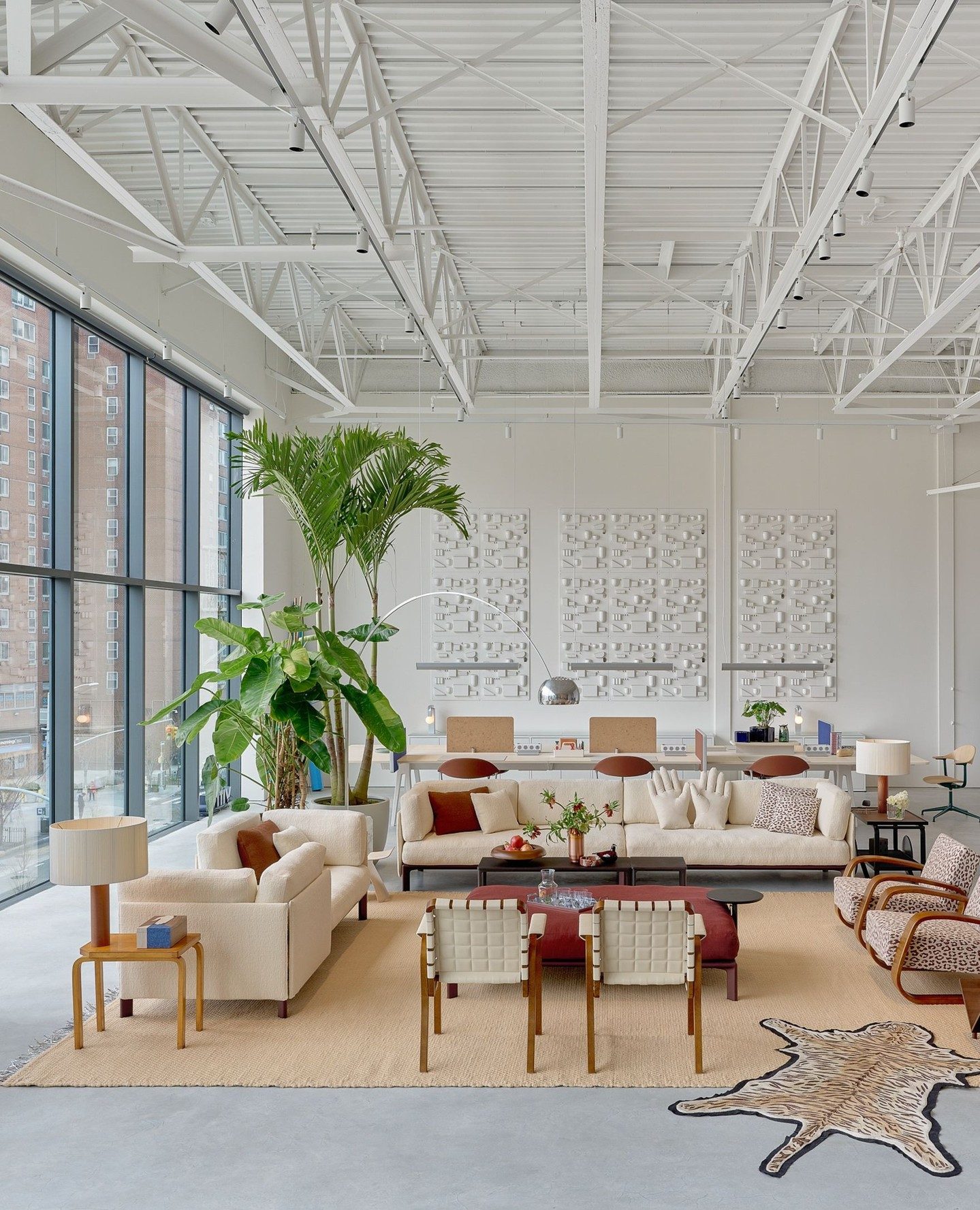
Showrooms sit between a store and an office: a place to show the product, meet clients and work. At Vitra’s furniture showroom, with AtelierTek Architects, we took a loft back to its bones and gave it a seamless concrete floor, architectural millwork and a custom terrazzo bar. At Calvin Klein’s studio, designed by Richard Gluckman, the 24-foot conference table was too big for the elevator and was lifted in by crane.
Starting a retail project with us
Send us the address, the brand’s drawings or design standards, and the opening date. We will tell you what the landlord, the building and, where it applies, the Landmarks Preservation Commission will need, and what has to be ordered first. See our work as a general contractor in Manhattan, or call (718) 599-0031.